

Arabidopsis Antibody Products
Supported by in-house scientists and first-in-class technical platform, Creative Biolabs offers Arabidopsis antibodies to contribute to research on plant genetics, physiology, and biochemistry.
Background
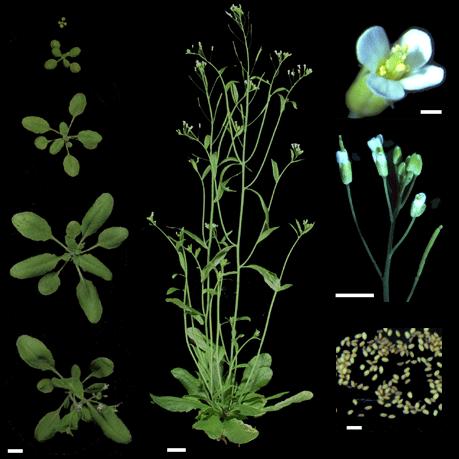
Arabidopsis thaliana, also known as Arabidopsis or mustard, is a small plant closely related to mustard and cabbage.
Its small genome size, short life cycle, large seed yield, easy genetic transformation and ability to grow in the laboratory make it a model organism for studying plant genetics, physiology, biochemistry, and development. A genetic resource center has been established to support the research activities of the Arabidopsis project by maintaining seed resources and allocating Arabidopsis to the research community.
Research of Arabidopsis as model organism
- For decades, Arabidopsis has been used as a model for biological and plant genetic research.
- Arabidopsis also rapidly produces a large number of offspring, allowing scientists to quickly study the combined effects of its interventions.
- Arabidopsis makes it possible to gain more in-depth knowledge of plant growth and development.
- Arabidopsis is also a major model of the number of genes in evolutionary time scales.
Arabidopsis has strong stress resistance and adaptability. Arabidopsis germplasm showed phenotypic and genotypic variation, which is the result of adaptation to local environmental conditions. Research on the natural variation of Arabidopsis germplasm in response to abiotic stress can discover key genes or alleles, thus finding the mechanism for plants to cope with adverse physical and chemical conditions.
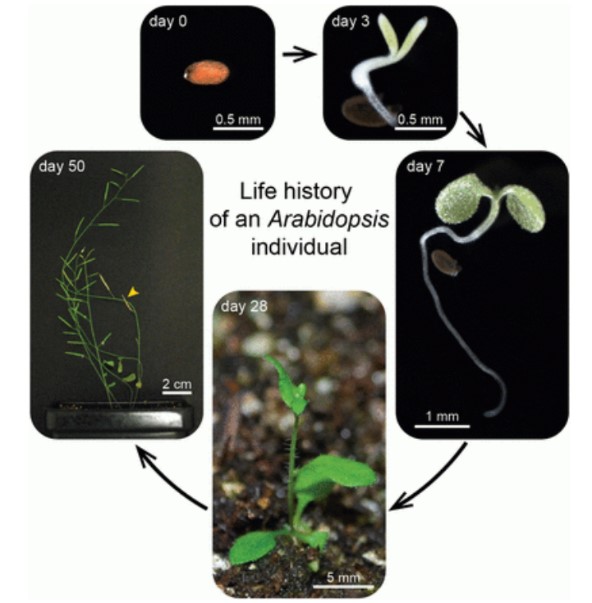 Fig.1 Life history of an Arabidopsis individual.
Each seed capsule of Arabidopsis contains 20-30 seeds, with a production time of 4-5 weeks. In addition, Arabidopsis has the ability to cross and self-fertilize. If any harmful mutations appear, they can be quickly isolated from the strain. Finally, just as the mutation-prone DNA of mice has increased its use in cancer research, the Arabidopsis gene has always been the key to its success as a model organism. If the genome of an organism is small, using DNA sequencing to reveal the bases that make up the chromosomes will be faster and easier. This information can later be used to identify and manipulate specific genes.
Like animals, plants regulate growth by using an array of hormones, which include auxin, ethylene, abscisic acid, cytokinins, gibberellins, and so on. The focus on the model genetic system of Arabidopsis makes plant biology a fusion of classical genetics and molecular genetics with plant development, physiology, and pathology. This in turn led to mechanical researches of the cellular processes that transmit information and regulate plant life. Some areas of utilization of Arabidopsis genes to plant biology have found answers to long-term questions covering cell morphogenesis, root, induction of development into flowers, flower and fruit development, plant light perception, plant disease resistance, plant cold and freezing resistance, and plant hormone action. Forward genetics study in Arabidopsis has not only evaluated receptor proteins for each of the major hormones but in many cases, ongoing Arabidopsis studies have identified how the hormone from protein complexes in the nucleus that translate signal into a specific gene expression response.
The first Arabidopsis genome sequence was derived from the accession Columbia-0, which is a standard lab strain. Genetic analyses of different Arabidopsis accessions that evolved under different environmental conditions provide molecular information for the study of plant adaptation. This case of intraspecific natural variation is known as phenotypic variation within the species caused by natural mutations that have been maintained in nature by evolutionary processes including humans or natural environment selection.
Scientists at Creative Biolabs’ are dedicated to bringing together years of valuable experience to help our clients shorten the research journey. We are committed to the Arabidopsis antibody products and related services, and dedicated to reducing the overall project development timeline for our clients.
Our provided hot target antibody products include the followings, but not limited to:
Target Selection
References
- David W. Meinke et al. Arabidopsis thaliana: A Model Plant for Genome Analysis. Science 282, 662 (1998).
- Maarten K, David M. The development of Arabidopsis as a model plant. The plant journal. 2010.
To download a Certificate of Analysis, please enter a lot number in the search box below. Note: Certificate of Analysis not available for kit components.
Lot Number