

D. melanogaster Antibody Products
Supported by in-house scientists and first-in-class technical platform, Creative Biolabs offers D. melanogaster antibody to investigative human disease models, behavior and aging research.
Background
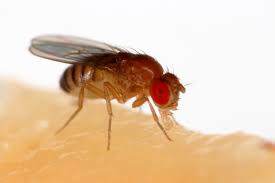
Drosophila melanogaster is used as a model organism to study subjects ranging from basic genetics to tissue and organ development. These features, as well as the short generation time, low maintenance costs, and the availability of powerful genetic tools make fruit flies qualified to study complex pathways related to biomedical research (including cancer).
Flies of the genus Drosophila, especially Drosophila, are laboratory organisms. Like all model organisms, they have been domesticated for empirical research, but continue to exist as wild populations.
Advantages of using Drosophila as model organism
- Short life
- Minimal training requirements
- Genetic manipulation
- Anatomical features
One of the main advantages is its short life cycle, which can produce a large number of fruit flies in a short time. Female flies can produce up to 1,500 eggs in their lifetime which provides stable new fruit flies for genetic research.
Fruit flies are small and have minimal training requirements. Many fruit flies can be reared and tested in small laboratories.
Genetic factors also make this fly an ideal model organism. D. melanogaster has only four pairs of chromosomes, while humans have 23 pairs. The simplicity is one of the reasons they were first used in genetic research. Drosophila genes can be easily mapped to investigate genetic transmission.
When comparing the number of genes present in the genome, there are 15,500 genes in fruit flies and 2,200 genes in humans. About 60% of Drosophila genes are the same because they come from a common ancestor. Many of these shared genes are related to cancer and other diseases.
Drosophila has anatomical features (such as wings and eyes) that can be easily characterized. These genetic markers can be easily identified under the microscope.
Research area of D. melanogaster as model organism
- D. melanogaster could be an excellent model for studying mechanism of human diseases as many basic biological, physiological, and neurological properties are conserved between mammals and D. melanogaster, and nearly 75% of human disease-causing genes are believed to have a functional homolog in the fly. Drosophila. These features make D. Melanogaster a great model candidate for human diseases and treatments for central nervous system diseases, such as inflammatory diseases, cardiovascular diseases, cancer, and diabetes.
- D. melanogaster is a candidate for transgenic model, making it easy to study human disease through mutation, genetic inactivation, or misexpression of fly homologs of human disease genes or human disease genes and proteins. Firstly, to generate a transgenic D. melanogaster is ease and cost effectiveness. Furthermore, available genetic manipulation, short life, and the homologs between human disease-causing genes make it possible to use D. melanogaster model.
- D. melanogaster can be used as a model for studying the proliferation and colonization of the gut microbiota. Studies showed that the composition of the intestinal-related bacterial community in drosophila is relatively simple, yet has a great impact on the development and physiology of the host, D. melanogaster. The interaction between bacteria of intestine and D. melanogaster is beneficial to each other. There is a new conceptual model established to understand the Drosophila melanogaster-intestinal flora interaction in the ecological environment. Stable interactions can be achieved through microbial farming. These results have developed the use of D. melanogaster as a model for studying the proliferation and colonization of the gut microbiota.
- In addition, D. melanogaster represents one such valid alternative in the drug discovery process. Many key physiological processes are well conserved from the fly to humans. D. melanogaster can not only be used for primary small molecule discovery validation but also become an important aspect of the target discovery process by complex genetics techniques in Drosophila. Screening for new drugs in D. melanogaster allows us to select the high-quality hits that have already show key characteristics, such as oral or “transdermal” availability, metabolic stability, low toxicity.
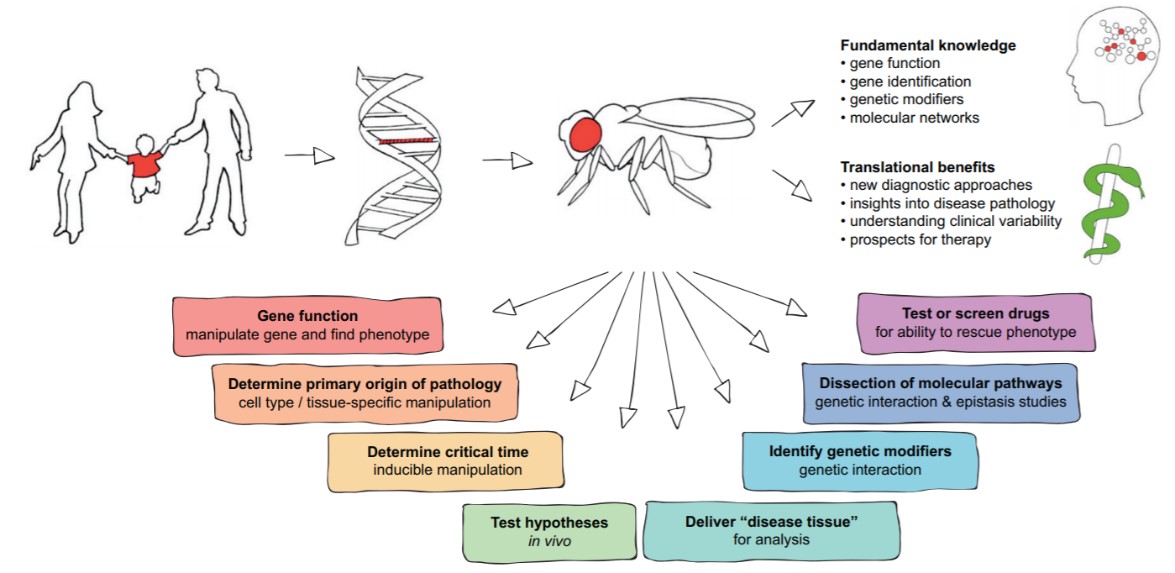 Fig. 1. Advantages and application of Drosophila as a disease model.
Scientists at Creative Biolabs are dedicated to bringing together years of valuable experience to help our clients shorten the research journey. We are committed to the D. melanogaster antibody products and services, and dedicated to reducing the overall project development timeline for our clients.
Our provided hot target antibody products include the followings, but not limited to:
Target Selection
Reference
- Voet M V, Nijhof V B, Oortveld M A, et al. Drosophila models of early onset cognitive disorders and their clinical applications. Neuroscience & Biobehavioral Reviews. 2014.
To download a Certificate of Analysis, please enter a lot number in the search box below. Note: Certificate of Analysis not available for kit components.
Lot Number