
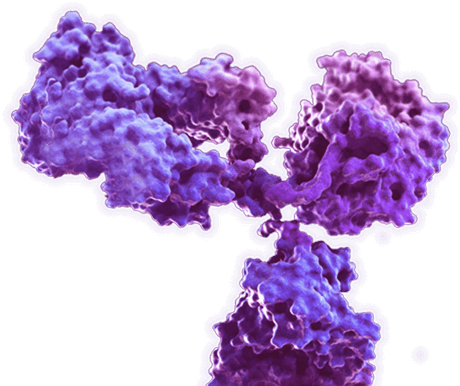
Yeast Antibody Products
Equipped with state-of-the-art facilities and experienced immunology experts, Creative Biolabs is dedicated to providing a series of yeast antibody products to facilitate your project success.
Background
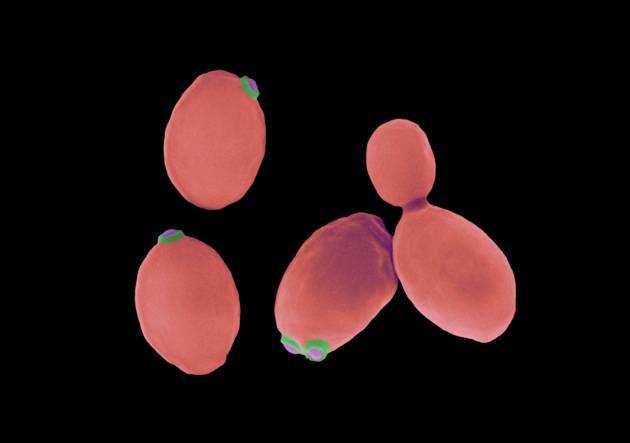
Some species have the ability to develop multicellular characteristics by forming connected clusters of budding cells called pseudohyphae or false hyphae. Yeast is a single-celled organism developed from a multicellular ancestor. Yeasts vary greatly in size, depending on the species and environment. They are usually 3-4 µm in diameter, and some yeasts can grow to 40 µm in size. Most yeasts reproduce asexually through mitosis, and some reproduce through an asymmetric division process called buds. With its single-cell growth habit, yeast can be compared with mold, which can grow hyphae. Fungal species that can exist in both forms (depending on temperature or other conditions) are called dimorphic fungi.
Sprouting yeast is an ideal experimental model organism for genetic research. Yeast has a longer life cycle and cell structure shared by eukaryotes. As a microorganism, yeast is easy to multiply and manipulate in the laboratory.
Why choose yeast as model organism?
- Easy cultivation and suitable for genetic analysis.
- Yeast cells share many basic biological properties with human cells.
- Genetic manipulation in yeast is easy and cheap compared to similar experiments in more complex animals such as mice and zebrafish.
- Yeast is one of the simplest eukaryotic organisms but many essential cellular processes are the same in yeast and humans.
- Genes from other species can be expressed in yeast and replace homologous yeast genes.
- Budding yeast is the first eukaryote to sequence the entire genome.
- Short generation time compared to other higher organisms.
Application of yeast species
- Budding yeast has been an experimental organism for genetic research.
- Yeast species have been utilized as excellent cell factories.
- Budding yeast has long been a valid eukaryotic model system for understanding basic cellular processes and disease mechanism
- Forward Genetics and Forward Chemical Genetics in Yeast
Yeast shares a common cell division cycle and cellular structure with other eukaryotes, and as a microorganism, which is easy to reproduce and manipulate in the lab. The ease of genetic analysis in yeast allowed researchers to study processes not found in other model organisms. Owing to the advantages, new techniques were developed in yeast and are now broadly used. Budding yeast was the first eukaryote sequenced, which accelerated the genome-wide analyses to map gene networks common to all life in turn.
The methylotrophic yeast species H. polymorpha, C. boidinii, and P. pastoris have been found wide applications as excellent cell factories. Because these organisms have the advantage of the availability of various strong promoters (e.g., the alcohol oxidase promoter) to drive heterologous gene expression, which are now being used industrially to produce a variety of valuable pharmaceutical proteins, such as hepatitis B antigen.
Especially, yeast species H. polymorpha makes it possible to produce heterologous membrane proteins. Which can be utilized in the mechanism and treatment study of various inherited diseases related to membrane protein malfunction. Hence, a reliable system to produce these proteins is of great medical interest.
The study of yeast has informed us about the molecular basis of human diseases, from birth defects to neurodegenerative diseases. The genetic tractability and ease of manipulation in the lab make yeast convenient for large-scale chemical and genetic screening. Some recent studies have shown the utilization of yeast genetics for high-throughput drug target identification.
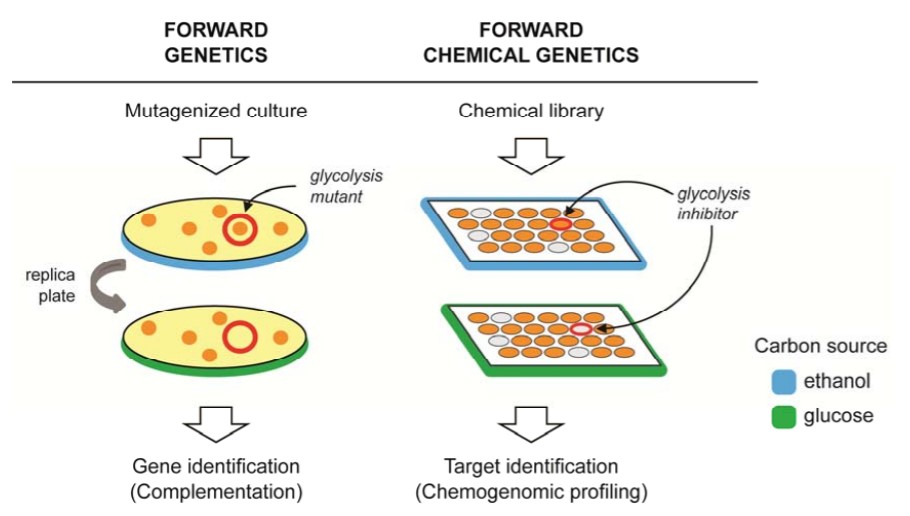 Fig.1 A comparison of forward genetic, and forward chemical genetic screening.
Eukaryotic model systems provide the experimental advantages for budding yeast, S. cerevisiae. Its rapid doubling time and simple growth requirements make it ideal for high-throughput phenotypic screening. Although this simple eukaryote cannot fully encapsulate the complexities of human cells, it is important for its contributions to the understanding of core cellular processes of higher eukaryotes. These screening have identified yeast genes important for cycle control, DNA repair, and various metabolic pathways, many of which have been found to be conserved in human.
Creative Biolabs’ scientists are dedicated to bringing together years of valuable experience to help our clients shorten the research journey. We are committed to the rice antibody products and services, and dedicated to reducing the overall project development timeline for our clients.
Our provided hot target antibody products include the followings, but not limited to:
Target Selection
Reference
- Onge R S, Ulrich S, Curt S, et al. Forward Chemical Genetics in Yeast for Discovery of Chemical Probes Targeting Metabolism. Molecules. 2012, 17, 13098-13115.
To download a Certificate of Analysis, please enter a lot number in the search box below. Note: Certificate of Analysis not available for kit components.
Lot Number