

AibGenesis™ Mouse Anti-Arabidopsis AT5G19240 Antibody (CBMOAB-20564FYC)
Cat: CBMOAB-20564FYC

Certificate of Analysis Lookup
To download a Certificate of Analysis, please enter a lot number in the search box below. Note: Certificate of Analysis not available for kit components.
Lot Number
To download a Certificate of Analysis, please enter a lot number in the search box below. Note: Certificate of Analysis not available for kit components.
Lot Number
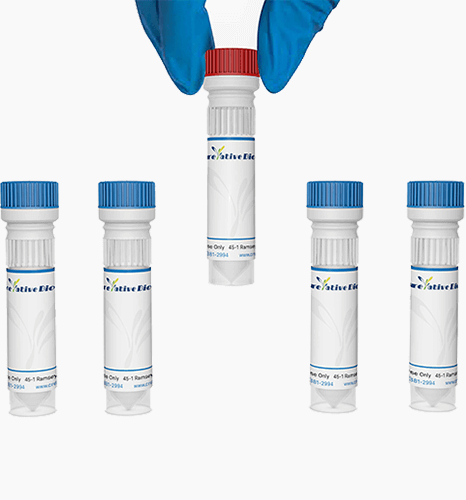
| Size: | |
| Conjugate: | |
| Inquiry |
- Specifications
- Application Information
- Target
- Reference
Specifications
| Host species | Mouse (Mus musculus) |
| Species Reactivity | A. thaliana (Arabidopsis thaliana) |
| Clone | MO20564FC |
| Specificity | This antibody binds to Arabidopsis AT5G19240. |
| Format | Liquid or Lyophilized |
| Storage | Store at 4°C: short-term (1-2weeks) Store at -20°C: long-term and future use |
| Purity | > 90% was determined by SDS-PAGE |
| Purification | Purified with Protein A or G affinity chromatography |
Application Information
| Application | WB, ELISA |
| Application Notes | ELISA: 1:1000-1:3000 Other applications are to be developed. The optimal dilution should be determined by the end user. |
Target
| Product Overview | Mouse Anti-Arabidopsis AT5G19240 Antibody is a mouse antibody against AT5G19240. It can be used for AT5G19240 detection in Western Blot, Enzyme-Linked Immunosorbent Assay. |
| Alternative Names | Putative uncharacterized protein At5g19240; At5g19240 |
| UniProt ID | Q0WTR1 |
| Protein Refseq | The length of the protein is 199 amino acids long. The sequence is show below: MAISKLHLVLFLLSVLLSLHRPVLSNTDGENLLFTVFNQYRESVNLTNLKKNKNAECLADEVVDQLQNQPCTNTTGSASVPGTDPGIPNFPNLLAKCRLNTNVTRDGLILQVCAPKHHSTPDLSSFANVLTKNLNDSKFTGAGVGIDSDGIWLVTVLTTNTPGGSYSNSGAFAFGVNGLVSSSLMFLHVLSHNSLSLFS. |
Reference
| Reference | González-Pérez, S., Gutiérrez, J., García-García, F., Osuna, D., Dopazo, J., Lorenzo, Ó., ... & Arellano, J. B. (2011). Early transcriptional defense responses in Arabidopsis cell suspension culture under high-light conditions. Plant Physiology, 156(3), 1439-1456. |
For Research Use Only | Not For Clinical Use.
Online Inquiry